MSRT, ISC, CAS,     h-index: 26

Google Scholar h-index 26
Google Scholar i10-index 81
Google Scholar Citation 2470
Number of Volumes 9
Number of Issues 31
Number of Articles 226
Number of Contributors 681
Article View 311,985
PDF Download 258,240
View Per Article 1380.46
PDF Download Per Article 1142.65
 
Number of Submissions 506
Rejected Submissions 266
Rejection Rate 53
Accepted Submissions 228
Acceptance Rate 45
Time to Accept (Days) 76
Number of Indexing Databases 12
Number of Reviewers 5100


Progress in Chemical and Biochemical Research           

Progress in Chemical and Biochemical Research was launched in 2018 by Sami Publishing Company with cooperation "Iranian Chemical Science and Technologies Association". This double blind peer-reviewed and indexed journal aim to provide a platform for researchers around the world to share their latest findings in all field of Chemistry, Medicinal and biochemistry. Experimental, theoretical and applied original research studies in all field of chemistrym Medicinal and biochemistry are welcomed for submission. The journal is Open Access with no article processing charges and all articles published in this journal are freely available for readers online without a subscription and authors retain the copyright of their work.   Prog. Chem.  Biochem. Res.    is published Quarterly (online and in print).

The average time between submission and final decision is 4-6 weeks and the average time between acceptance and publication is 2-3 weeks. All submitted manuscripts are checked for similarity through a trustworthy software named iThenticate to be assured about its originality and then rigorously peer-reviewed by the international reviewers.

==========================================================

Prog. Chem. Biochem. Res. is supported by:

1- Ministry of Science, Research and Technology (New)

2- Sami Publishing Company 

3- Iranian Chemical Science and Technologies Association

4- Islamic World Science Citation Center (ISC E-Journals


In Silico Molecular Docking, Scaffold Hopping, and PASS Prediction of Designed Pyrimidine-Based Analogues Their Synthesis and Biological Evaluation

Pages 99-117

https://doi.org/10.48309/pcbr.2026.541299.1460

Khemchand R. Surana, Sanjana N. Sonawane, Pawan R. Sonawane, Sunil K. Mahajan

Abstract A series of pyrimidine derivatives was synthesized using an environ-mentally friendly Biginelli reaction, where benzaldehyde analogs, ethyl acetoacetate, and urea were condensed under alkaline conditions. Mo-lecular docking against cyclin-dependent kinase (CDK, PDB ID: 1HCK) revealed docking scores ranging from –5.8 to –8.7, compared to –5.3 for ascorbic acid. Among these, compound 2g exhibited the most favorable binding (–8.7), suggesting strong potential for further investigation. Scaffold-hopping analysis using the mcule 1-click-scaffold-hop server generated structural analogs, and PASS prediction indicated diverse biological activities. Specific compounds displayed enhanced activity predictions: compounds 2b, 2e, and 2f showed moderate anti-inflammatory potential (Pa = 0.588), 2m demonstrated higher anti-inflammatory (Pa = 0.620) and NADH kinase inhibitory activity (Pa = 0.582), while 2d showed notable kinase inhibitory (Pa = 0.653) and an-tioxidant (Pa = 0.566) potential. The synthesized compounds exhibited concentration-dependent radical scavenging activity in the range of 100–500 ppm. At 100 ppm, compound 2a achieved the highest scaveng-ing rate (89.84%), surpassing ascorbic acid (77.12%). These results val-idate the in silico prediction of antioxidant properties. In antimicrobial screening, streptomycin was ineffective against E. coli and Streptococ-cus spp. In contrast, compound 2d displayed significant antibacterial activity, supporting its selection for further biological evaluation.

Novel Microwave Assisted Synthesis of Some 3‌־ {2‌־ (1H‌־ 1, 2, 4-triazolyl) ethyl}‌־2‌־ Substituted Quinazolinone Analogues and Their Evaluation for Antimicrobial Potential

Pages 118-129

https://doi.org/10.48309/pcbr.2026.545107.1464

Pravin B. Jadhav, Sandip B. Ahire, Amol M. Shirode, Khemchand R. Surana, Vinod A. Bairagi

Abstract A significant class of fused heterocyclic compounds, quinazolinones have garnered a lot of interest in medicinal chemistry due to their di-verse range of pharmacological characteristics, which include antimi-crobial, anticancer, anti-inflammatory, anticonvulsant, and antihyper-tensive effects. As a privileged scaffold, the quinazolinone nucleus pro-vides a variety of substitution options at the 2- and 3-positions, fre-quently resulting in compounds with increased bioactivity. Many stud-ies have looked into modifying these positions to create new therapeu-tic possibilities, especially in the field of antimicrobial drug discovery. The new sequence to develop 1, 2, 4 ־triazole derivatives via Nie-mentowski reactions and heterocyclization using microwave synthesiz-er through benzoxazinone intermediate formation was discussed. 1, 2, 4־ triazole and 3‌־ {2‌־ (1H‌־ 1, 2, 4- triazolyl) ethyl} ־2  ־ substituted quinazo-linone derivatives were derived and investigated by IR spectroscopy, mass spectrometry and NMR techniques. These new triazole analogues have been tested for their in vitro antibacterial and antifungal proper-ties against a variety of gram-positive, gram-negative, and fungal spe-cies. These new analogues show moderate antibacterial and antifungal action by inhibiting growth by 30-40% against S. aureus, E. coli, C. albi-cans, and A. niger.

CaO Nanoparticles with Calcite Signatures: Antibacterial Function and Biosafety

Pages 130-143

https://doi.org/10.48309/pcbr.2026.543134.1462

Ubaid Ullah Khan, Kausar Rehman, Kainat Gul, Shafqat Munir, Zafar Ali Sha

Abstract Predominantly calcite-phase CaO nanoparticles were prepared by alka-line precipitation followed by calcination and characterized by SEM, XRD, FTIR, UV–Vis, and bioassays. XRD confirmed nanocrystallinity with crystallite sizes of approximately 37–45 nm and reflections indi-cating substantial conversion of CaO to calcite during processing. FTIR showed surface hydroxyls and carbonate groups consistent with hydrat-ed/carbonated CaO, and UV–Vis revealed strong absorption below 400 nm. Antibacterial activity was dose-dependent, with the largest inhibi-tion zone (24 mm) against Escherichia coli at 1,500 μg mL⁻¹. Hemocom-patibility assays showed increasing hemolysis with dose (12.4% at 250 μg mL⁻¹ and 21.0% at 750 μg mL⁻¹) exceeding the conventional 10% safety threshold, while brine shrimp assays indicated low acute aquatic toxicity (LC₅₀ > 1,000 μg mL⁻¹; 33.3% mortality at that dose). Overall, these calcite-rich CaO nanoparticles exhibit notable antimicrobial ef-fects but pose hemolysis risks at higher concentrations; safer deploy-ment may benefit from immobilized or buffered formats and tighter CO₂ control during synthesis to preserve phase stability.

Theoretical Investigation of the Kukhtin-Ramirez Reaction Leading to Oxyphosphoranes Using DFT

Pages 144-154

https://doi.org/10.48309/pcbr.2026.548673.1470

Tayebeh Hadadi, Mehdi Shahraki

Abstract The kinetics and proposed mechanisms of Kukhtin Ramizer's reaction between trimethyl phosphite and two dicarbonyl compounds (diacetyl and benzil) were investigated using computational methods. Three pos-sible mechanistic pathways were considered: a concerted cycloaddition mechanism (a), and two stepwise mechanisms (b and c), initiated by the nucleophilic attack of the phosphite on the carbon and oxygen at-oms of the carbonyl group, respectively. All calculations were per-formed using density functional theory (DFT) at the M06-2X/6-31+G(d,p) level in the gas phase and in two solvents: acetonitrile and 1,4-dioxane. Conformational analysis showed two stable forms (trans and gauche) for diacetyl, while only a single twisted conformation was observed for benzil. Global reactivity indices indicated that trimethyl phosphite acts as a nucleophile and the dicarbonyl compounds as elec-trophiles. Thermodynamic and kinetic parameters were calculated for all steps of the reaction, as well as for the overall process. In the pres-ence of diacetyl, mechanism (a) was preferred in the gas phase, while mechanism (b) became favorable in both solvents. Similarly, for benzil, mechanism (a) was more favorable in the gas phase, and mechanism (b) was preferred in solution. These findings provide a deeper understand-ing of the reaction pathways and the influence of molecular structure and solvent effects on Kukhtin Ramizer's reaction.

Perovskite Sensitized Solar Cells: A Synergistic Pathway to High-Performance Photovoltaics

Pages 155-181

https://doi.org/10.48309/pcbr.2026.550243.1483

Sodiq Areo Akintoyese, Kayode John Olaniyi, Olufunke Lydia Adedeji, Mayowa James Johnson, Tobi Samson Ogundeji, Gabriel Ayinde Alamu, Mojoyinola Kofoworola Awodele, Oluwaseun Adedokun

Abstract Based on the basic formula ABX3, perovskite solar cells (PSCs) have become a revolutionary photovoltaic technology, providing a viable route for effective and affordable solar energy conversion. This review offers a thorough examination of PSC developments, starting with a summary of their basic characteristics and their vital role in tackling the world's energy problems. The fundamental architectures are examined, including planar, inverted, and mesoporous designs, as well as the mechanisms that enable their excellent performance. Lead-based, tin-based, mixed Sn-Pb, germanium-based, and polymer-based PSC types are all examined in this study, with a particular emphasis on Double Halide Perovskites (DHPs) and their critical function in improving PSC stability. The important methods for increasing efficiency, such as enhancing the perovskite active layer and charge transport layers (ETLs and HTLs) are explored. Lastly, the major issues that PSCs face are discussed, such as lead toxicity and long-term stability, and insights are provided into how they can develop a sustainable energy landscape in the future. This in-depth examination offers readers a detailed grasp of the current state of PSC technology, including recent innovations and key avenues for future research and development.

Unlocking Enhanced Performance: Synergistic Roles of Nick-el and Graphene Oxide in TiO2 Photoanodes for Dye-Sensitised Solar Cells

Pages 182-208

https://doi.org/10.48309/pcbr.2026.559732.1485

Victoria Mofuke Odebunmi, Tobi Samson Ogundeji, Mayowa James Johnson, Joseph Olumide Ajiboye, Hakeem Olayinka Oyeshola, Gabriel Ayinde Alamu, Yekinni Kolawole Sanusi, Oluwaseun Adedokun

Abstract This review provides a comprehensive overview of the role of graphene oxide (GO) and nickel (Ni) as synergistic modifiers for titanium (IV) oxide (TiO2​) photoanodes in dye-sensitised solar cells (DSSCs). The inherent limitations of pristine TiO2​, such as rapid charge recombination and dye degradation, significantly hinder the performance of DSSCs. This review explores how the incorporation of GO and Ni into TiO2​-based nanocomposites can effectively mitigate these issues, thereby enhancing the overall efficiency and effectiveness of these photoelectrochemical cells. We delve into the synergistic interactions between Ni and GO, detailing how this combination can boost charge transport, reduce recombination, and stabilize the dye. The review covers various synthesis strategies for Ni-GO-TiO2​ nanocomposites, their characterisation techniques, and the resulting performance evaluations in DSSC devices. Furthermore, we discuss the current challenges and future perspectives in the development of these advanced photoanodes, offering insights for future research directions. This work highlights the potential of Ni-GO-TiO2​ nanocomposites as a promising path toward high-performance DSSCs.

Green Synthesis of Benzochromene Derivatives Using Nanoparticles ZrCl4@Arabic Gum as a Heterogeneous Catalyst

Pages 209-218

https://doi.org/10.48309/pcbr.2026.554543.1479

Fatemeh Hakimi Saryazdi, Mahboobeh Mahmoodabadi

Abstract In this research, 2-aminobenzochromene derivatives were prepared using a heterogeneous and reusable catalyst, ZrCl4@Arabic Gum. The synthesis proceeded via a three-component reaction between 2-naphthol, malononitrile, and different aldehydes in ethanol at 60 °C. This approach overcomes the limitations of conventional synthetic methods that often depend on toxic, costly, and non-recyclable catalysts, which may lead to harmful chemical by-products and environmental risks. The findings indicate that ZrCl4@Arabic gum acts as a highly effective, non-toxic catalyst that can be easily separated and reused several times with minimal reduction in activity. The reaction occurs efficiently under gentle conditions, producing high yields of products in a short time. Utilizing ethanol as an environmentally friendly solvent also increases the process’s sustainability. Altogether, this method offers a practical, safe, and economical pathway for synthesizing 2-aminobenzochromene derivatives—key compounds with prospective uses in medicinal chemistry and pharmaceuticals—and advances the development of greener synthetic techniques. Under the optimized conditions, the desired products were obtained in up to 94% yield within 20 min. The catalyst was reused three times with negligible loss of activity.

Identification, Purification, and Optimization of Copper-Resistant Acinetobacter sp. for Crude Oil Biodegradation

Pages 219-230

https://doi.org/10.48309/pcbr.2026.569764.1497

Mohsen Samimi, Mohsen Shahriari-Moghadam

Abstract The present study aimed to isolate and identify bacteria resistant to copper ions (Cu²⁺) and capable of degrading crude oil from the vicinity of a copper mine. The optimal conditions affecting the biodegradation of crude oil in the presence of Cu²⁺ were also investigated. Herein, a unique strain with the ability to biodegrade crude oil and tolerate Cu²⁺ was isolated and purified. Identification results showed that the mentioned strain was most similar to Acinetobacter sp. and was designated as ZA-1. Based on the findings, using crude oil as the sole source of carbon and energy, compared to bacterial growth in nutrient broth, leads to a decrease in the strain's tolerance to Cu²⁺. Based on the results of ANOVA and the rate of crude oil biodegradation by strain ZA-1, it was determined that all factors studied except NH₄Cl concentration had a significant effect on the crude oil biodegradation process. The optimal conditions for crude oil biodegradation were determined to include pH=8, temperature=30 °C, salinity=30 g/L, and NH₄Cl concentration of 1.5 g/L. Strain ZA-1 was able to biodegrade 30.70% of crude oil. Considering the ability of the purified strain to degrade crude oil and tolerate Cu²⁺, the results of this study can be utilized in biological treatment processes for wastewater containing Cu²⁺ and contaminated with petroleum compounds.

Antidiarrheal Properties and GC-MS Analysis of Methanolic Leaf Extract of Plumeria pudica

Articles in Press, Accepted Manuscript, Available Online from 19 February 2026

https://doi.org/10.48309/pcbr.2026.553708.1472

Anubhav Dubey

Abstract The current study assessed and justified the use of a methanolic extract from Plumeria pudica leaves for therapeutic purposes. Mice were used for the in vivo antidiarrheal test, and gas chromatography–mass spectrometry was employed to identify the phytoconstituents. According to the GC-MS data, the main polyphenol found in Plumeria pudica was pyrogallol (64.04 %), along with polysaccharides, triterpenoids, amino acids, steroids, and fatty acid esters. In both doses, 200 mg/kg and 400 mg/kg, the extract produced a significant reduction in defecation (𝑝 < 0.01). The leaf extract at 200 mg/kg and 400 mg/kg decreased the total amount of wet feces produced after the administration of castor oil, with values of 6.33 ± 0.83 g and 5.69 ± 0.42 g, respectively, compared to the control group, which produced 5.00 ± 0.23 g at the dose of 10 mg/kg. Therefore, this work described the chemical makeup of Plumeria pudica and offers mechanistic evidence for its therapeutic application in conditions involving diarrhea and hyperactive gastrointestinal motility.

Cyanoacrylate Chemistry and Polymerization Mechanisms

Cyanoacrylate Chemistry and Polymerization Mechanisms

Volume 7, Issue 2, Spring 2024, Pages 129-142

https://doi.org/10.48309/pcbr.2024.422869.1304

Humphrey Sam Samuel, Ugo Nweke-Maraizu, Emmanuel E Etim

Abstract Cyanoacrylates have gained widespread attention and found applications across various industries due to their exceptional bonding capabilities. This study delves into the fundamental aspects of cyanoacrylate chemistry and polymerization mechanisms to address the challenges associated with premature curing and enhance the understanding of the underlying processes. Cyanoacrylates, recognized for their exceptional adhesive properties, undergo rapid polymerization catalyzed by minute amounts of moisture. The essence of the problem lies in the need to optimize the polymerization process to prevent premature bonding and ensure controlled curing. The investigation involves a comprehensive analysis of cyanoacrylate's chemical makeup, and its adhesive potency. Notably, the study explores the inadvertent discovery of cyanoacrylates during World War II, underscoring their versatile applications and the need for a nuanced understanding of their reactivity. Findings reveal the intricacies of cyanoacrylate polymerization, shedding light on the factors influencing the process, including temperature, humidity, and substrate composition.

A review on Bioimaging, Biosensing, and Drug Delivery Systems Based on Graphene Quantum Dots

A review on Bioimaging, Biosensing, and Drug Delivery Systems Based on Graphene Quantum Dots

Volume 4, Issue 1, Winter 2021, Pages 44-56

https://doi.org/10.22034/pcbr.2020.237134.1102

Abdollah Khosravanian, Ahmad Moslehipour, Hossein Ashrafian

Abstract Graphene quantum dots (GQDs), which are the most capable carbon-based nanostructures, play a significant role in biological studies. These nanostructures show significant attributes including low toxicity, high solubility in numerous solvents, notable electronic characteristics, strong chemical inertness, high specific surface areas, and abundant sites for functionalization. In addition, GQDs have adaptability as well as capability to be improved via absorbent surface chemicals as well as the addition of modifiers or nanoparticles. Accordingly, we have presented here the fundamental properties, synthesis techniques, and the applications of GQDs in biosensing, bioimaging, and drug delivery. It is worth mentioning that toxicity is a significant issue which has restricted biological applications of QDs. Hence, the toxicological features of GQDs have been covered in this review paper.

Possibility of Using Gas Injection Method for Increasing Pressure in Well A: the Case of Oil Fields in Southern Iran

Possibility of Using Gas Injection Method for Increasing Pressure in Well A: the Case of Oil Fields in Southern Iran

Volume 4, Issue 2, Spring 2021, Pages 207-219

https://doi.org/10.22034/pcbr.2021.257998.1165

Alireza Bozorgian

Abstract The hydrocarbon reservoir is a porous and permeable structure in the basement that houses a natural accumulation of hydrocarbons in liquid or gaseous form and is separated from the surrounding area by impermeable rocks. In a more concrete description, hydrocarbon reservoirs can be likened to an air-filled kite, in which the shell plays the role of the same impermeable rock, and as soon as this balanced medium is pierced, reservoir fluids, as air exits the kite rapidly by forces. The wells are driven. Of course, the strength of this natural drift decreases simultaneously with the production of the reservoir; Iranian reservoirs are, for example, said to have an average annual 10-8% natural drop in reservoir pressure and drop in production flow from the well - drop in production flow from the well with direct reservoir pressure drop. The correct division of a reservoir requires knowledge of the thermodynamic behavior of the phases in the reservoir, i.e. liquid, gas, solid, as well as knowledge of the forces affecting the production mechanism

Prediction of Gas Hydrate Formation in Industries

Prediction of Gas Hydrate Formation in Industries

Volume 3, Issue 1, Winter 2020, Pages 31-38

https://doi.org/10.33945/SAMI/PCBR.2020.1.4

Alireza Bozorgian, Zahra Arab Aboosadi, Abolfazl Mohammadi, Bizhan Honarvar, Alireza Azimi

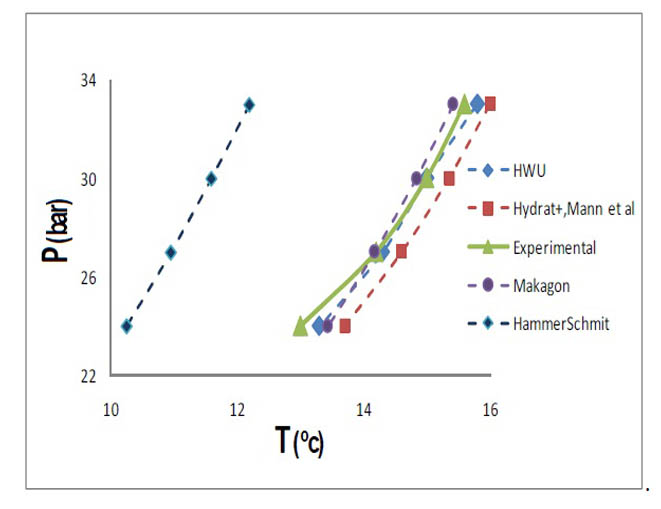
Abstract Natural gas and crude oil in natural underground reservoirs are in contact with water. Stability of these compounds at the presence of both components and complete dependence on the host molecules by forming holes in their guest molecules are replaced. There are many gases such as methane, ethane, propane, carbon dioxide, hydrogen sulphides that can play the role of guest molecules. The natural gas hydrate formation in different sectors of the oil and gas industry in downstream processes causes the production to stop or decrease. Therefore, the need to know the causes and conditions of hydrate formation is strongly felt. In this study, Van der Waals and Platteeuw model was used to predict hydrate formation conditions. The prediction of hydrate formation conditions needs equilibrium fugacity of gaseous components, and for the equilibrium molar component of water.

Risk Management in Information Technology

Risk Management in Information Technology

Volume 3, Issue 2, Spring 2020, Pages 130-134

https://doi.org/10.33945/SAMI/PCBR.2020.2.6

Amir samimi

Abstract This study has examined risk management planning in the field of Information Technology in industrial companies. Today, information is considered a valuable factor along with other factors of production. With rapid technological change, globalization and the expansion of efficient domain are among the requirements for achieving competitive advantage. Information technology in the fields of hardware, software, volume and data type and telecommunication networks is rapidly evolving and changing. Most managers of organizations have become aware of the importance of using this technology in increasing the efficiency and effectiveness of organizations and greater customer satisfaction. In addition to failing to meet the projected benefits, it is likely that the failure of this IT will not be limited to the financial and economic disadvantages of managing the subtleties of project execution and may continue to IT as long as an organization fails. Regarding the process of risk management or information security risks, there are methods and methodologies which define steps to evaluation process and risk treatment according to the considered approach. But in most of these methods, some basic principles and concepts are considered the same.

Keywords Cloud